
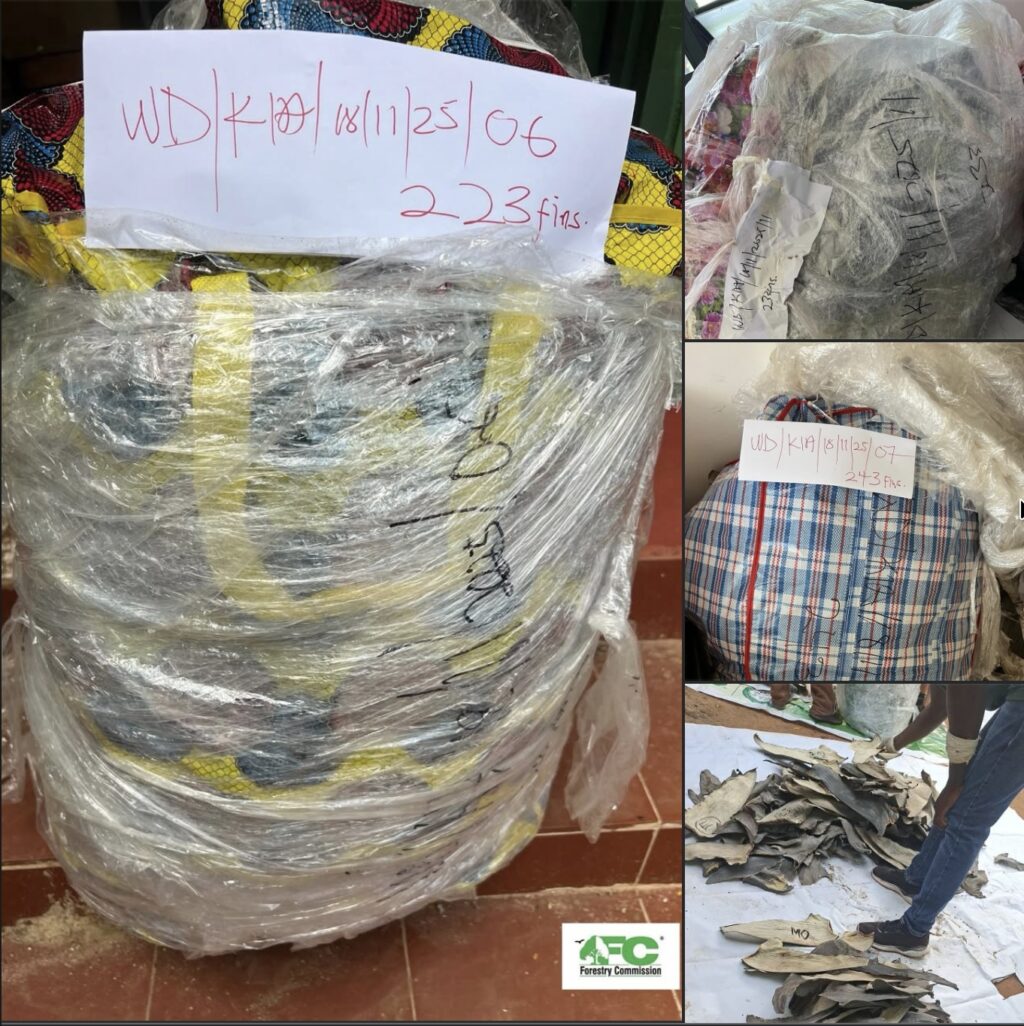
Photo: A cross-section of the seized bags containing shark fins
The Forestry Commission has seized 3,967 dried shark fins at the Kotoka International Airport in what officials describe as a major interception of illegal wildlife products destined for export.
The consignment, weighing 488 kilogrammes, was intercepted by officers of the Wildlife Division stationed at the airport during routine checks at the Swissport Cargo Centre. The fins were concealed in 14 tightly wrapped jute bags, popularly referred to as “Ghana Must Go” bags, and were allegedly bound for Mauritania.
Officials estimate the street value of the seized fins at between 300,000 and 400,000 US dollars, underlining the high stakes involved in the illicit trade in endangered marine species.
According to the Forestry Commission, the operation was triggered by a tip-off from the Veterinary Services Directorate at KIA. The items had been declared as dried fish, but closer inspection revealed they were, in fact, dried shark fins, a clear misrepresentation of the contents of the shipment.
Further checks showed that the consignment was being exported without the mandatory permit and accompanying documentation required under the Wildlife Resources Management Act, 2023 (Act 1115). Section 22(2)(a) of the Act makes it explicit that a permit must be granted before any wildlife or wildlife product can be exported, re-exported or imported.
Preliminary identification of the fins indicates they were harvested from several shark species, including the blue shark (Prionace glauca), the common thresher (Alopias vulpinus), the silky shark (Carcharhinus falciformis), and the hammerhead shark (Sphyrna mokarran).
All the identified species are listed under Appendix II of the Convention on International Trade in Endangered Species of Wild Fauna and Flora (CITES). While species under Appendix II are not necessarily on the brink of extinction, international trade in their parts is tightly regulated to prevent overexploitation and ensure their long-term survival. Exporting such species without a valid CITES permit is prohibited.
The Forestry Commission said the seizure highlights persistent attempts by traffickers to exploit Ghana’s ports and airports as transit points for illegal wildlife products, particularly shark fins, which remain in high demand in parts of North Africa and Asia.
The seized fins are currently being held by the Forestry Commission as investigations continue. The primary suspect linked to the consignment has been handed over to the Airport Police Station to assist with further investigations and possible prosecution.
Officials say enforcement agencies will continue to strengthen collaboration at entry and exit points to clamp down on wildlife trafficking, warning that offenders face stiff penalties under Ghana’s updated wildlife laws.
About The Author