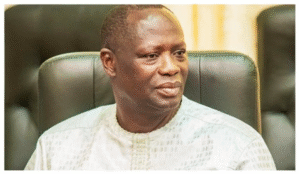

Photo: the old and the new
The creation of Goldbod marked a decisive break from Ghana’s long and often painful cycle of currency instability. Conceived as a domestic response to external shocks and structural weaknesses, the initiative has begun to deliver what years of orthodoxy and hesitation could not: a measure of confidence in the cedi and a clearer framework for managing gold-backed inflows into the economy.
Since its rollout, pressure on the currency has eased, speculative behaviour around forex demand has slowed, and the state has regained some control over how Ghana’s most strategic resource feeds into macroeconomic stability. These are not abstract gains. They affect import costs, fuel prices, inflation expectations and household planning. For the first time in years, economic management appears guided by a coherent strategy rather than emergency fixes.
Yet instead of engaging these outcomes honestly, the New Patriotic Party has chosen a different path: to discredit Goldbod by manufacturing doubt. Figures are selectively quoted, timelines distorted and routine accounting entries presented as evidence of failure. The aim is not clarification but confusion, not accountability but political sabotage.
This is not unfamiliar territory. When policy success emerges outside an opposition party’s control, the instinct is to deny its legitimacy. Goldbod has become a political inconvenience precisely because it undermines a central NPP talking point: that the current administration inherited an economy too broken to stabilise without external rescue. The data increasingly tells a different story.
What makes the campaign against Goldbod particularly troubling is its reliance on insinuation rather than evidence. Claims of losses are made without context. Transactions are framed as scandals without explaining the mechanics behind them. Public anxiety is stoked, even when the institutions charged with oversight have clarified the facts. It is a strategy designed to erode confidence rather than test policy.
Meanwhile, the broader effects of stabilisation are beginning to show. Reduced currency volatility has brought some predictability back into pricing. Businesses that had suspended planning are recalibrating. Importers are no longer operating entirely on fear. Gold inflows, once captured loosely through fragmented channels, are now better aligned with national priorities.
Goldbod’s importance, however, goes beyond economics. It represents a choice to rely on domestic tools, Ghanaian expertise and state coordination rather than perpetual dependence on external prescriptions. That alone makes it politically vulnerable. A policy that works disrupts old narratives and exposes past failures.
This is why the current moment demands clarity rather than noise. Ghana has spent too many years trapped in cycles of policy reversal driven by partisan change. If every reform is dismantled the moment it yields political discomfort, national progress becomes impossible.
The attempt to unmake Goldbod through manufactured facts is not an act of opposition; it is an act of sabotage. It risks weakening a fragile recovery and returning the economy to the very instability all sides claim to oppose. Economic confidence, once broken, is far harder to rebuild than political reputations.
The real question, then, is not whether Goldbod is perfect. No policy is. The question is whether Ghana is prepared to defend a working solution against cynical politics. The early signs suggest Goldbod is doing what it was designed to do. The noise around it says more about the opposition’s desperation than the policy’s failure.
History will be clear on this point. When a country finally finds a path out of recurring crisis, those who attempt to block it for short-term gain rarely escape judgment.
About The Author